.jpg)

What Are Modic Changes?
Modic changes (MC) are degenerative changes in the vertebral endplates and bone marrow of the spine. They are visible on MRI and are commonly associated with chronic low back pain and disc degeneration. In 1988, Michael Modic, a neuroradiologist from the Cleveland Clinic, first described these changes to reflect active inflammation or fatty changes in the bone and categorized them into three types that track the progression of spinal wear-and-tear. (1-3)
Types of Modic Changes
- Modic Type 1 (Active/Acute): Shows inflammation and swelling (edema) within the bone marrow. It is often aasociated with acute pain, disc herniation or infection. It is thought to be caused by some combination of injury, inflammation, or bacterial infection. (4,5)
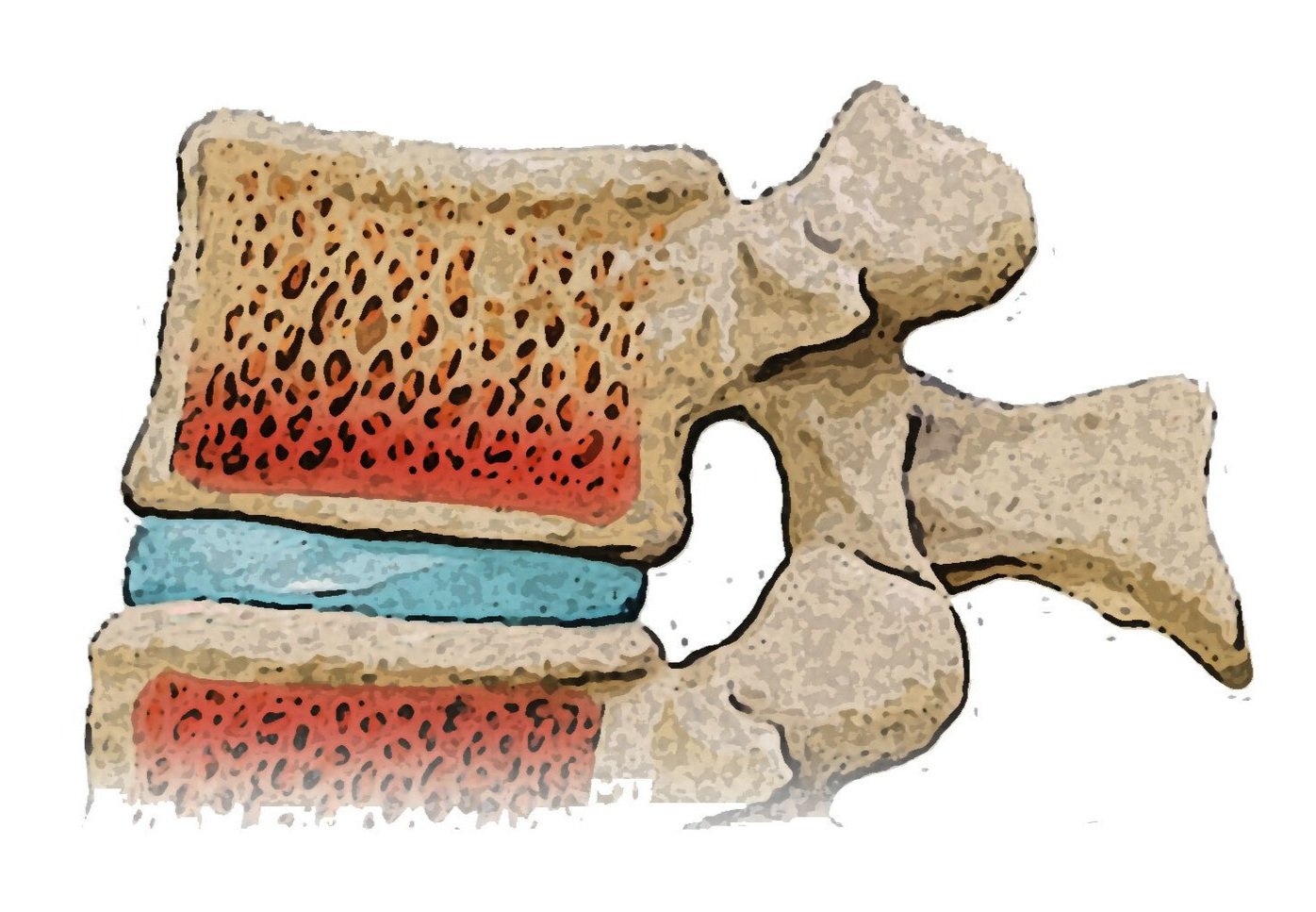
- Modic Type 2 (Chronic/Fatty): Shows the replacement of normal red bone marrow with yellow fatty marrow due to restricted blood flow (ischemia). It shows a more chronic, stabilized or sometimes non-symptomatic stage.

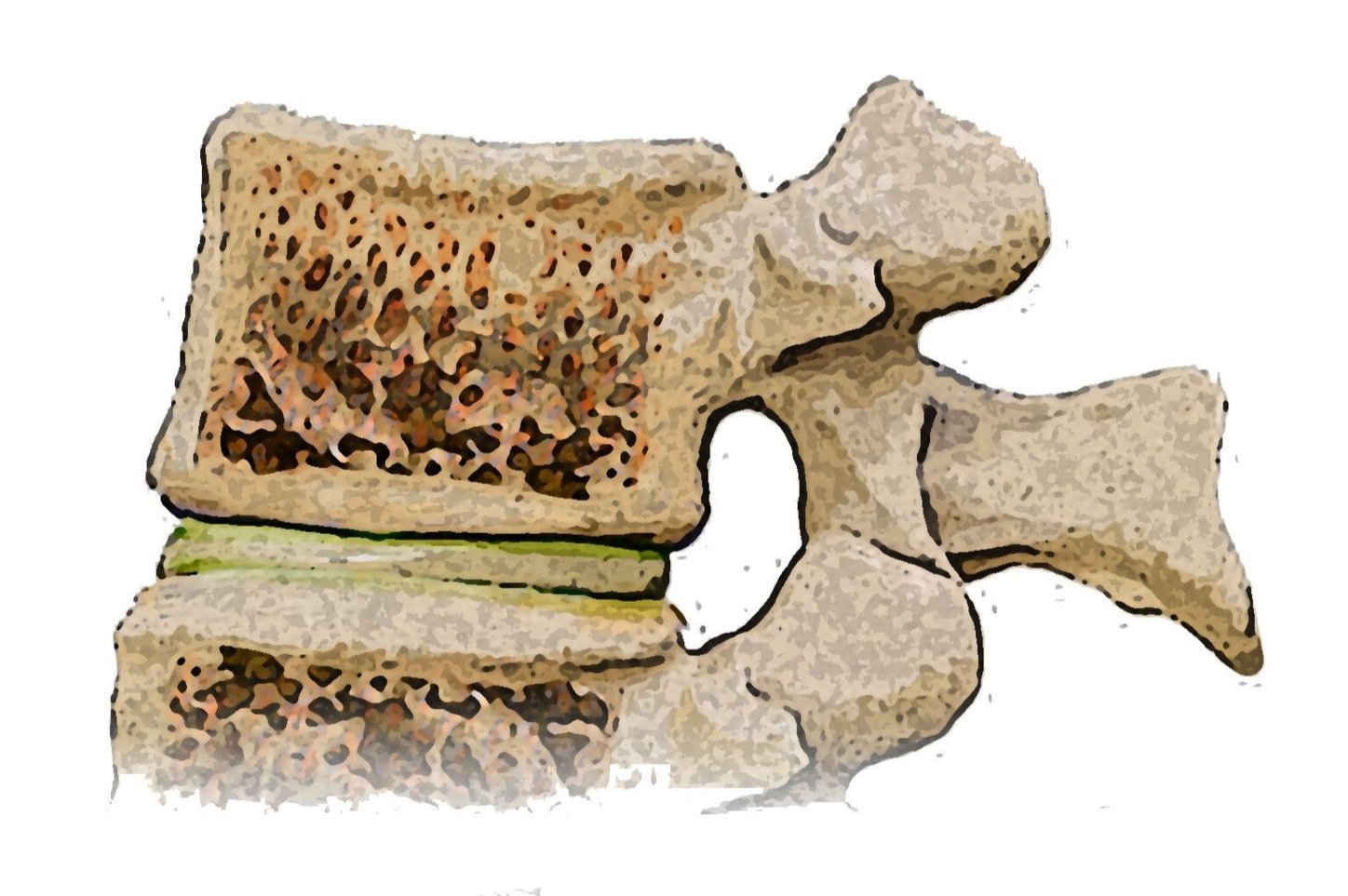
- Modic Type 3 (Sclerosis): Rare and shows the hardening and thickening of the bone beneath the cartilage of the vertebral endplate. Like the previous Modic types, the exact cause is not fully known but type 3 is likely a result of the body's attempt to repair and stabilize the affected segments.
Modic Changes and Pain
Inflammatory bony changes, specifically of Modic type 1, possess the inherent potential to trigger pain. And some early papers confirmed a link between Modic endplate changes and back pain, particularly nighttime pain and morning stiffness. (6,7) However, several more recent reviews indicate no association between Modic changes and LBP:
“Modic changes in the lumbar spine are not associated with clinically significant axial low back pain severity or patient disability.” (8)
“The associations between Modic changes and LBP-related outcomes are inconsistent.” (9)
“There is no conclusive evidence on the causative role of Modic change in chronic low back pain or any influence on the long-term outcome in patients with LBP or lumbar disc herniations.” (10)
“The inconsistency of findings … means that no conclusions can be drawn about an association between Modic change and LBP.” (11)
Treatment for Modic Changes
Modic changes, like joint degeneration and disc lesions, are pathoanatomic indicators of persistent physical stress on the spine. While these structural abnormalities may not directly cause symptoms, the underlying stressors contributing to Modic changes' development can also lead to concurrent complaints. Effective resolution of symptoms involves addressing and eliminating the underlying sources of stress on the spine. By targeting and removing these stressors, it is possible to alleviate the associated symptoms, despite the structural changes. So, having Modic changes or degeneration (arthritis) does not necessarily mean you’re doomed to a lifetime of pain. Conservative chiropractic care is a potent, medically-recommended option for back pain sufferers, even those with degeneration or arthritis. (12)
For quick reference, check out the Modic Classifications Infographic below.
REFERENCES
1. Modic MT, Masaryk TJ, Ross JS, Carter JR. Imaging of degenerative disk disease. Radiology. 1988 Jul;168(1):177-86.
2. Modic MT, Steinberg PM, Ross JS, Masaryk TJ, Carter JR. Degenerative disk disease: assessment of changes in vertebral body marrow with MR imaging. Radiology. 1988 Jan;166(1):193-9
3. Gaillard F, Hapugoda S, Murphy A, et al. Modic type I endplate change. Reference article, Radiopaedia.org (Accessed on 14 Jun 2023)
4. Din RU, Cheng X, Yang H. Diagnostic role of magnetic resonance imaging in low Back pain caused by vertebral endplate degeneration. Journal of Magnetic Resonance Imaging. 2022 Mar;55(3):755-71.
5. Crockett MT, Kelly BS, van Baarsel S, Kavanagh EC. Modic type 1 vertebral endplate changes: injury, inflammation, or infection?. American Journal of Roentgenology. 2017 Jul;209(1):167-70.
6. Bailly F, Maigne JY, Genevay S, Marty M, Gandjbakhch F, Rozenberg S, Foltz V. Inflammatory pain pattern and pain with lumbar extension associated with Modic 1 changes on MRI: a prospective case–control study of 120 patients. European spine journal. 2014 Mar;23:493-7. Link
7. Arnbak B, Jurik AG, Jensen TS, Manniche C. Association between inflammatory back pain characteristics and magnetic resonance imaging findings in the spine and sacroiliac joints. Arthritis care & research. 2018 Feb;70(2):244-51.
8. Lambrechts MJ, Issa TZ, Toci GR, Schilken M, Canseco JA, Hilibrand AS, Schroeder GD, Vaccaro AR, Kepler CK. Modic Changes of the Cervical and Lumbar Spine and Their Effect on Neck and Back Pain: A Systematic Review and Meta-Analysis. Global Spine Journal. 2022 Nov 30:21925682221143332.
9. Herlin C, Kjaer P, Espeland A, Skouen JS, Leboeuf-Yde C, Karppinen J, Niinimäki J, Sørensen JS, Storheim K, Jensen TS. Modic changes—their associations with low back pain and activity limitation: a systematic literature review and meta-analysis. PloS one. 2018 Aug 1;13(8):e0200677.
10. Viswanathan VK, Shetty AP, Rajasekaran S. Modic changes-An evidence-based, narrative review on its patho-physiology, clinical significance and role in chronic low back pain. Journal of Clinical Orthopaedics and Trauma. 2020 Sep 1;11(5):761-9.
11. Hopayian K, Raslan E, Soliman S. The association of modic changes and chronic low back pain: A systematic review. Journal of Orthopaedics. 2022 Nov 17.
12. Qaseem A, Wilt TJ, McLean RM, Forciea MA, Clinical Guidelines Committee of the American College of Physicians. Noninvasive treatments for acute, subacute, and chronic low back pain: a clinical practice guideline from the American College of Physicians. Annals of internal medicine. 2017 Apr 4;166(7):514-30.
13. Dr. Tim Bertelsman, Demystifying Modic Changes - Your Ultimate 5-minute Guide, ChiroUp blog, 06/15/2023
.jpg)