.jpg)
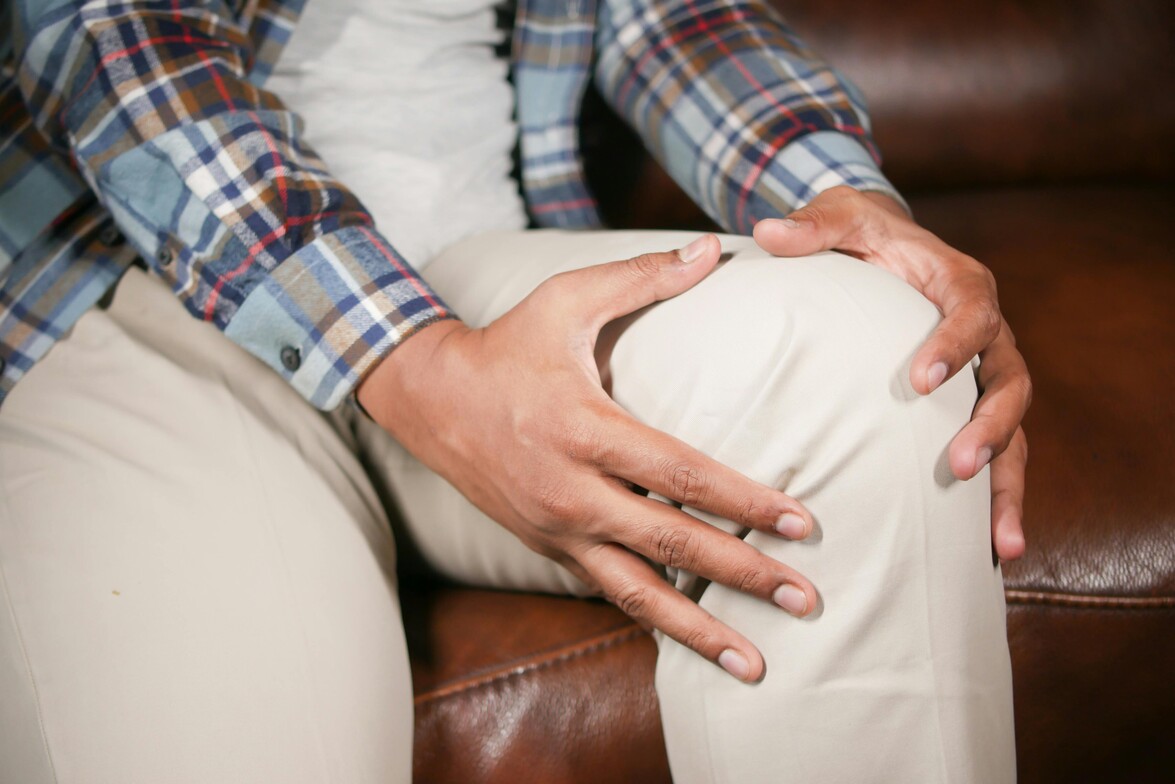
Knee osteoarthritis (OA) is a common, chronic and progressive degenerative joint disease where the protective cartilage that cushions the ends of the knee bones gradually wears down. It causes pain, swelling, stiffness, a grinding sensation from the bone-on-bone friction, decreased range of motion, and the feeling of instability or the knee buckling or giving way.
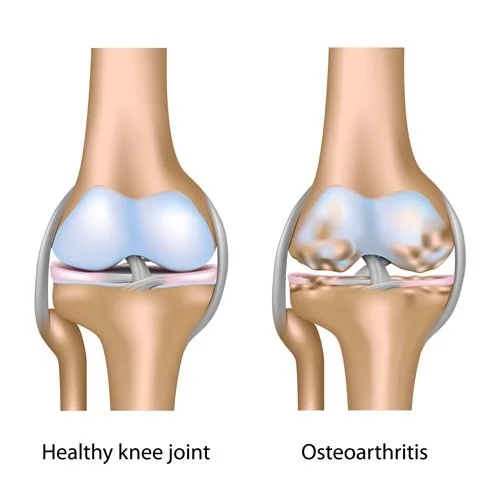
It is one of the leading causes of pain and disability in adults over the age of 60. Up to 16% of the population experiences the condition’s hallmark pain, stiffness, and functional limitation, often leading to reduced mobility, diminished quality of life, and escalating healthcare costs from medications and joint replacement surgeries. (1)
For decades, the default response for knee osteoarthritis treatment has been medication — most often NSAIDs and acetaminophen. While these drugs provide temporary relief, they come with well-known risks: gastrointestinal bleeding, cardiovascular events, and even increased mortality in older patients with related conditions. (2,3)
The good news? Research confirms that conservative, non-drug therapies often rival or outperform medications for knee osteoarthritis pain relief — without the dangerous side effects. (2,4-6,7,8) Many chiropractors are uniquely positioned to deliver these therapies, combining manual expertise, functional rehabilitation, and evidence-based adjunctive tools. From joint and soft-tissue interventions to nutrition and patient education, these strategies improve pain, mobility, and quality of life. Here are some of the most effective approaches.
Joint Manipulation / Mobilization
Gentle oscillatory mobilization and axial distraction restore joint mechanics, improve synovial fluid distribution, and reduce pain input. Adding manual therapy, including joint manipulation/mobilization, to rehabilitation programs enhances outcomes with pain reduction and functional gains. (6,9-14)
Myofascial Release
Myofascial release reduces abnormal muscle tension, improves mobility, and restores gait mechanics by addressing the tissues surrounding the joint and hip restrictions. Targeted release of the TFL, hamstrings, quads, gastroc, and adductors is especially impactful for pain reduction and functional restoration. (6,15)
Instrument-Assisted Soft Tissue Mobilization (IASTM)
IASTM helps disrupt adhesions outside and around the joint, improves tissue glide, and enhances functional range of motion. It is particularly useful for addressing chronic stiffness and can amplify exercise outcomes. (16,17)
Acupuncture
Acupuncture stimulates opioid-mediated descending pain pathways and improves inflammation. Although evidence is mixed, several trials demonstrate pain and function improvements when acupuncture is integrated into a comprehensive plan of care. (18-21)
Patient Education
One of our most potent tools is counseling and education (6) — empowering patients to help themselves through various avenues.
-
Selecting osteoarthritis knee exercises (eg, aquatic, aerobic, yoga, strengthening and flexibility programs)
-
Activity pacing
-
Posture, Ergonomics, & Biomechanics
-
Walking aids (eg, canes)
-
Orthotics and footwear
-
Hydration & nutritional support (eg, glucosamine and chondroitin)
-
Weight management
-
Coping strategies for chronic pain
-
Sleep hygiene
-
Use of topical creams for symptomatic relief
Delivering all of this education is one of the most valuable things we do for patients.
Low-Level Laser Therapy (LLLT)
Stimulates cellular metabolism, reduces inflammation, and promotes repair.
Transcutaneous Electrical Nerve Stimulation (TENS)
Blocks pain signals through neural modulation, providing short-term relief as a supportive therapy.
Elastic Therapeutic Taping/ Kinesio Taping (KT)
Supports motion, enhances the sense of our body's positioning, and may reduce pain temporarily.
For quick reference, check out the knee osteoarthritis treatment infographic below.
Conclusion
Knee osteoarthritis is a common, disabling condition, but it doesn’t require a lifetime of medication dependence. Research shows that chiropractic tools like manipulation, soft-tissue therapies, acupuncture, and supplementation effectively reduce pain and improve function. Conservative therapies aren’t just safer — they’re often more effective than medications.
REFERENCES
1. Cui A, Li H, Wang D, Zhong J, Chen Y, Lu H. Global, regional prevalence, incidence and risk factors of knee osteoarthritis in population-based studies. EClinicalMedicine. 2020 Dec 1;29.
2. Weng, Q., Goh, S.L., Wu, J., Persson, M.S., Wei, J., Sarmanova, A., Li, X., Hall, M., Doherty, M., Jiang, T. and Zeng, C., 2023. Comparative efficacy of exercise therapy and oral non-steroidal anti-inflammatory drugs and paracetamol for knee or hip osteoarthritis: a network meta-analysis of randomised controlled trials. British journal of sports medicine, 57(15), pp.990-996.
3. Zeng C, Zhang W, Doherty M, Persson MS, Mallen C, Swain S, Li X, Wei J, Lei G, Zhang Y. Initial analgesic prescriptions for osteoarthritis in the United Kingdom, 2000–2016. Rheumatology. 2021 Jan;60(1):147-59.
4. Chen X, Fan Y, Tu H, Luo Y. Clinical efficacy of different therapeutic options for knee osteoarthritis: A network meta-analysis based on randomized clinical trials. PLoS One. 2025 Jun 18;20(6):e0324864.
5. Simple therapies outperform drugs for knee arthritis pain relief. ScienceDaily [Internet]. 20 Sep 2025 [cited 2025 Sep 21].
6. Zhang W, Moskowitz R, Nuki G, et al. OARSI recommendations for the management of hip and knee osteoarthritis, Part II: OARSI evidence-based, expert consensus guidelines. Osteoarthritis and Cartilage. 2008;16:137-162.
7. Ma YT, Dong YL, Wang B, Xie WP, Huang QM, Zheng YJ. Dry needling on latent and active myofascial trigger points versus oral diclofenac in patients with knee osteoarthritis: a randomized controlled trial. BMC Musculoskeletal Disorders. 2023 Dec;24(1):1-3.
8. Hochberg MC, Martel-Pelletier J, Monfort J, Möller I, Castillo JR, Arden NK, Berenbaum F, Blanco-García FJ, Conaghan PG, Domènech Carbó G, Henrotin Y. Combined chondroitin sulfate and glucosamine for painful knee osteoarthritis.
9. Deyle GD, Allison SC, Matekel RL, Ryder MG, Stang JM, Gohdes DD, Hutton JP, Henderson NE, Garber MB. Physical therapy treatment effectiveness for osteoarthritis of the knee: a randomized comparison of supervised clinical exercise and manual therapy procedures versus a home exercise program. Physical therapy. 2005 Dec 1;85(12):1301-17.
10. Brantingham JW, Globe G, Pollard H, Hicks M, Korporaal C, Hoskins W. Manipulative therapy for lower extremity conditions: expansion of literature review. Journal of manipulative and physiological therapeutics. 2009 Jan 1;32(1):53-71.
11. Hoeksma HL, Dekker J, Ronday HK, Heering A, Van Der Lubbe N, Vel C, Breedveld FC, Van Den Ende CH. Comparison of manual therapy and exercise therapy in osteoarthritis of the hip: a randomized clinical trial. Arthritis Care & Research: Official Journal of the American College of Rheumatology. 2004 Oct 15;51(5):722-9.
12. Pollard H, Ward G, Hoskins W, Hardy K. The effect of a manual therapy knee protocol on osteoarthritic knee pain: a randomised controlled trial. The Journal of the Canadian Chiropractic Association. 2008 Dec;52(4):229.
13. Tucker ML. The relative effectiveness of a non-steroidal anti-inflammatory medication (meloxicam) versus manipulation in the treatment of osteoarthritis of the knee (Doctoral dissertation).
14. Dwyer L, Parkin-Smith GF, Brantingham JW, Korporaal C, Cassa TK, Globe G, Bonnefin D, Tong V. Manual and manipulative therapy in addition to rehabilitation for osteoarthritis of the knee: assessor-blind randomized pilot trial. Journal of manipulative and physiological therapeutics. 2015 Jan 1;38(1):1-21.
15. Perlman AI, Sabina A, Williams AL, Njike VY, Katz DL. Massage therapy for osteoarthritis of the knee: a randomized controlled trial. Archives of Internal Medicine. 2006 Dec 11;166(22):2533-8.
16. Karimi Soloklo, Z., Boozari, S. and Kahrizi, S., 2025. Effects of a two-week instrument-assisted soft tissue mobilization and exercise therapy versus sham and exercise on gait kinetics in moderate knee osteoarthritis: a randomized controlled trial. Journal of Manual & Manipulative Therapy, pp.1-12
17. Anjum, N., Sheikh, R.K., Omer, A., Anwar, K., Khan, M.M.H., Aftab, A. and Awan, W.A., 2023. Comparison of instrument-assisted soft tissue mobilization and proprioceptive neuromuscular stretching on hamstring flexibility in patients with knee osteoarthritis. PeerJ, 11, p.e16506.
18. Berman BM, Lao L, Langenberg P, Lee WL, Gilpin AM, Hochberg MC. Effectiveness of acupuncture as adjunctive therapy in osteoarthritis of the knee. Ann Intern Med. 2004 Dec 1;141(12):901-10.
19. Lin X, Huang K, Zhu G, Huang Z, Qin A, Fan S. The effects of acupuncture on chronic knee pain due to osteoarthritis: a meta-analysis. JBJS. 2016 Sep 21;98(18):1578-85.
20. Zhang Y, Wang C. Acupuncture and Chronic Musculoskeletal Pain. Current Rheumatology Reports. 2020 Nov;22(11):1-1.
21. Lin X, Li F, Lu H, Zhu M, Peng TZ. Acupuncturing of myofascial pain trigger points for the treatment of knee osteoarthritis: A systematic review and meta-analysis. Medicine. 2022 Feb 25;101(8).
22. Dr. Tim Bertelsman, Conservative Treatments for Knee Osteoarthritis: Evidence-Based Options for Chiropractors, ChiroUp Blog, 10/02/2025
.jpg)